
After the world's first 308,000 DWT methanol dual-fuel VLCC was delivered ahead of schedule in April, several listed shipping companies on the Singapore Exchange's main board successively disclosed capital-operation plans, sparking a boom in low-carbon deep-sea fleet investment. The sgxmain.asia finance team reviewed main-board shipping equity issuance announcements, REIT asset expansions, and green bond issuance data, and combined them with SGX's low-carbon listing support policies to explain how methanol-powered vessels are reshaping shipping valuations and capital-market logic.
1. Main-board shipping fundraising is concentrated in methanol dual-fuel fleets
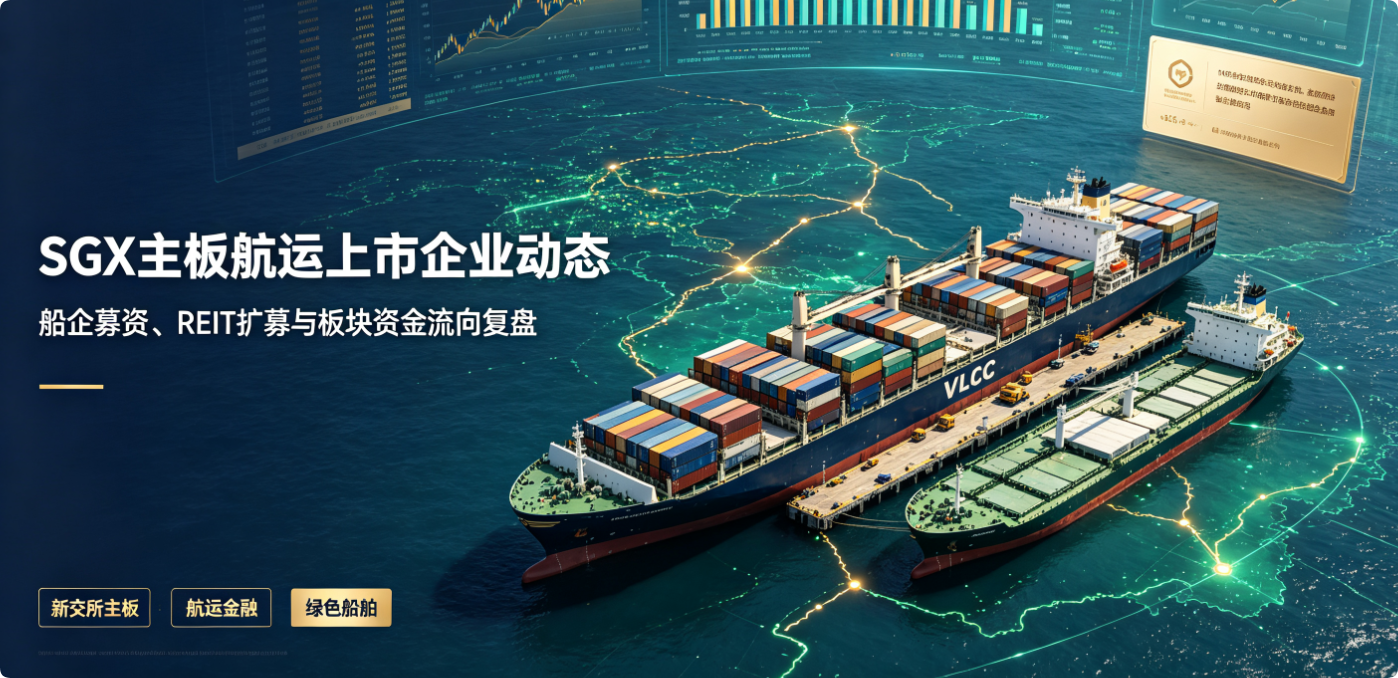
Recently, several SGX main-board listed shipowners mainly engaged in crude oil and bulk transportation announced rights issues and placements, with proceeds mainly used for the batch construction of methanol dual-fuel VLCCs and multi-purpose energy-saving vessels.
- The green review fast track is in place: SGX has simplified the prospectus review process for green shipping projects, shortening approval cycles for low-carbon vessel fundraising projects by 30%;
- Financing-cost advantage is obvious: green vessel bonds issued through the SGX FIRST sustainable-finance platform carry coupon rates 120-190 basis points lower than traditional shipping bonds;
- The expansion plan is clear: leading shipowners plan to add dozens of methanol-powered tankers and bulk carriers over the next two years, with routes covering the Middle East-Singapore corridor and key energy-transport routes across ASEAN countries.
Corporate earnings show that methanol dual-fuel vessels can generate tradable compliance carbon credits from their emissions profile, effectively reducing EU CBAM border-carbon tax expenses. Their long-term operating profitability is better than traditional fuel vessels, making them a core reason for institutional investors to add positions.
2. Shipping S-REITs continue expanding, building out port bunkering and deep-sea fleets
Several Singapore port and tanker REITs have simultaneously completed asset injections, with investment targets covering Southeast Asian methanol deep-water bunkering terminals and ocean-going leased fleets:
- Stable-dividend appeal is increasingly visible, with annual dividend yields in the sector remaining in the 4.8%-6.2% range, attracting continued buying from sovereign funds and Asian asset managers;
- The asset mix is becoming greener, as traditional fuel-vessel leasing assets are gradually replaced by methanol dual-fuel newbuild leasing assets, lifting the REIT's long-term ESG rating;
- Fueling berths under construction in Sihanoukville and Hai Phong have been designated as key acquisition targets by several logistics REITs, helping complete the regional green-shipping support asset layout.
3. FY2026 mandatory ESG disclosure reshapes the shipping valuation framework
For FY2026, SGX main board has officially implemented mandatory ESG disclosure rules for shipping companies. All listed shipowners must fully disclose fleet carbon emissions, green fuel procurement scale, and low-carbon vessel investment plans:
- Companies that fail to meet disclosure standards will face restrictions on refinancing and rights issues;
- Investments related to methanol- and ammonia-fueled fleets may be separately counted as sustainable assets, lifting valuation premiums;
- On-exchange carbon credit trading data will be included in earnings notes, and carbon-asset income will become a new profit growth point for listed shipping companies.
4. Market fund flows and industry outlook
In Q1 2026, net inflows into SGX shipping-themed ETFs rose sharply, and the weighting of low-carbon vessel sub-indices continued to increase. Institutional analysis suggests that the commercialization of methanol-powered VLCCs has completely eased concerns over the low-carbon transition in deep-sea shipping. Over the next 2-3 years, more Southeast Asian shipping firms are expected to list on the SGX main board. Green vessel financing, shipping-leasing REITs, and maritime carbon trading will form the three main investment themes for the main-board shipping sector.
Conclusion
Supported by SGX's differentiated green-finance policies and coupled with Southeast Asia's mature methanol-fuel supply chain, SGX main-board shipping listed companies are comprehensively completing low-carbon fleet upgrades. As a benchmark vessel type, the methanol dual-fuel VLCC opens a two-way channel between real-world shipping and the capital market, continuously helping Singapore become a core hub for green deep-sea shipping finance in Southeast Asia and beyond.

